RV Storage: Complete Guide to Motorhome and Camper Storage Solutions
Storing your RV properly between trips protects your investment and keeps it ready for your next adventure. Should you choose covered or uncovered parking? How do you prepare an RV for storage, and what size space do you need? With over 20 storage facilities, our team has helped thousands of RV owners find secure storage solutions for motorhomes, travel trailers, fifth wheels, and campers. This guide covers everything about RV storage so you can protect your recreational vehicle with confidence.
What Is RV Storage?
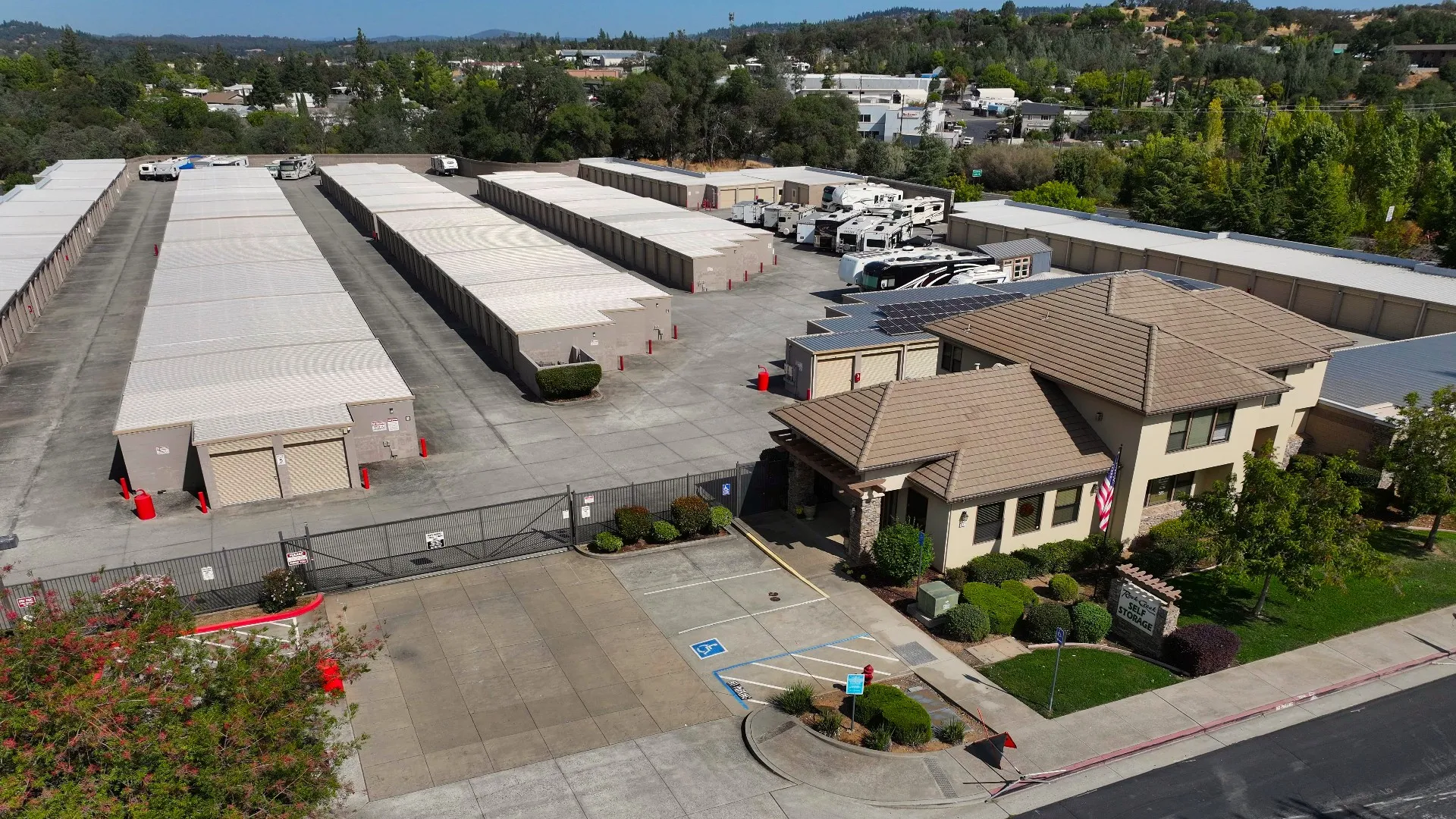
RV storage provides designated parking spaces or enclosed units specifically designed to accommodate recreational vehicles. These spaces range from simple outdoor parking spots to covered carport-style areas to fully enclosed units that protect your RV like a private garage. Storage facilities offer security features like gated access and security cameras that provide better protection than street parking or storing at home.
RV storage solves multiple problems for owners. Many residential neighborhoods prohibit RV parking on streets or driveways, making off-site storage necessary. Even where allowed, home storage exposes your RV to weather, potential vandalism, and takes up valuable driveway or yard space. Dedicated RV storage facilities provide the space, security, and sometimes amenities that keep your recreational vehicle in excellent condition between adventures.
Types of RV Storage Options
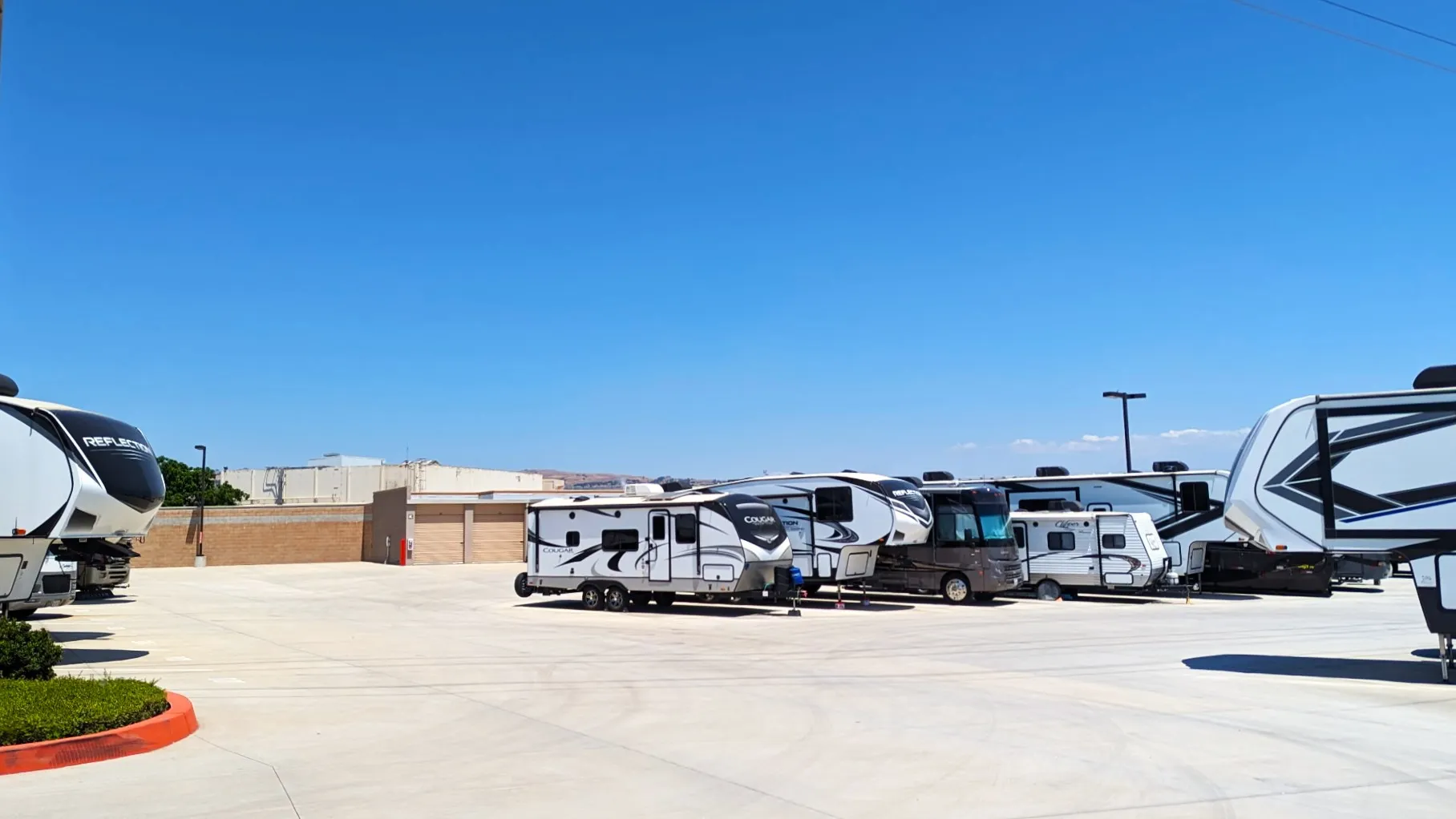
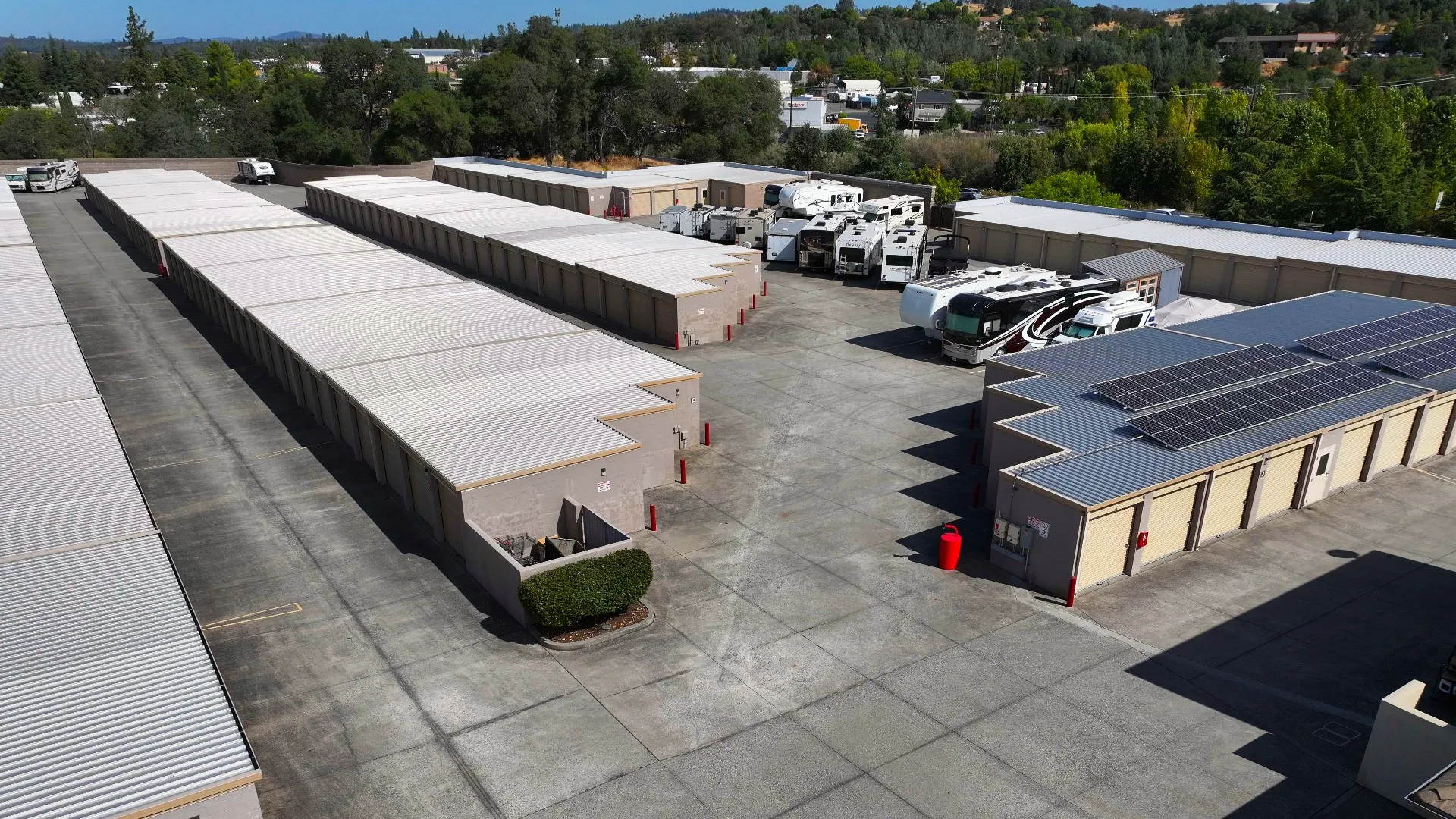
Uncovered Outdoor Parking: The most budget-friendly option, uncovered RV storage provides a designated parking space in a secure facility without overhead protection. Your RV sits in an open lot but benefits from gated access, surveillance, and monitored entry. This option works well for RVs you would normally park outside anyway and for owners prioritizing affordability while maintaining security.
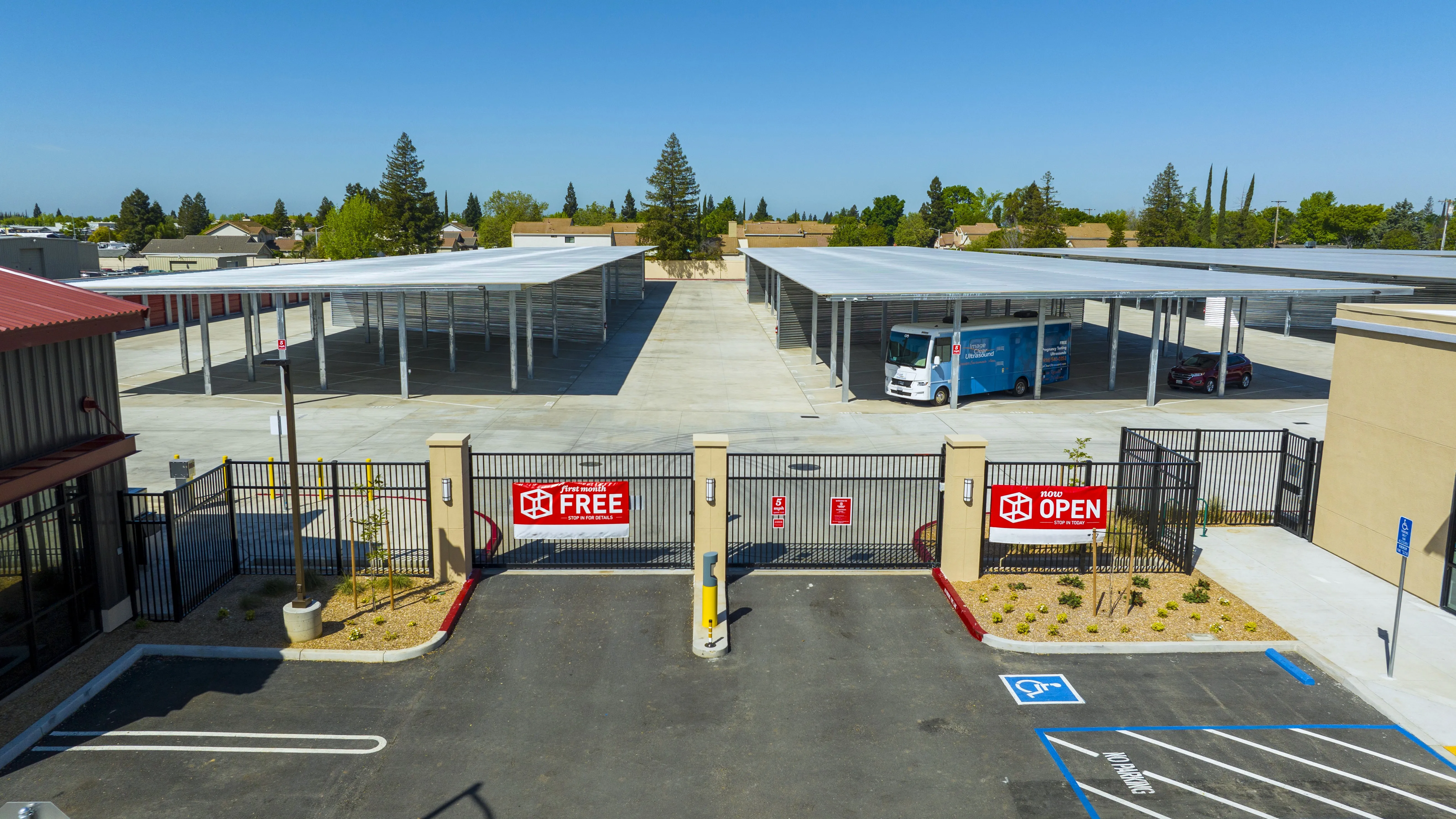
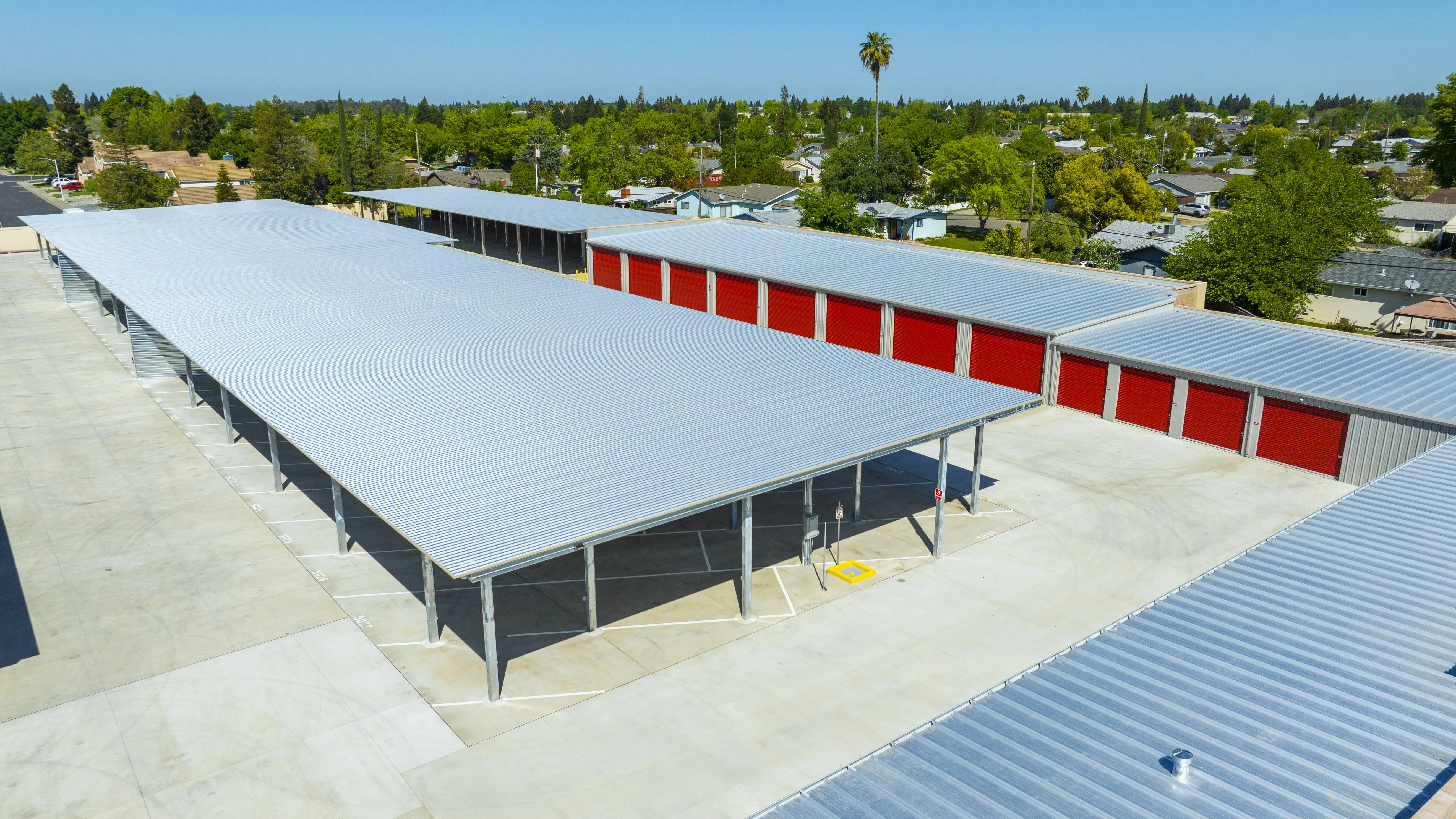
Covered RV Storage: Covered spaces offer a roof structure that protects your RV from direct sun, rain, and weather while sides remain open for airflow. This protection prevents sun damage to exteriors, reduces interior temperature extremes, and protects rubber seals and components from UV deterioration. Covered storage represents an excellent middle ground between cost and protection for many RV owners.
Enclosed RV Storage: Fully enclosed units with walls and doors provide complete protection from weather, sun, and environmental exposure. These premium spaces essentially give your RV a private garage, offering maximum protection for your investment. Enclosed storage makes sense for luxury motorhomes, new RVs, or vehicles you want to keep in pristine condition.
Choosing the Right RV Storage Size
RV storage size requirements depend on your specific vehicle dimensions. Measure your RV's length including any hitches, ladders, or accessories that extend beyond the main body. Account for height too. Some covered structures have clearance limits. Width matters less since most RV storage spaces accommodate standard widths, but measure if you have slide-outs extended.
Small travel trailers and pop-up campers (15-20 feet): Usually fit in 10x20 to 10x25 spaces
Mid-size travel trailers and small motorhomes (20-28 feet): Typically need 10x30 to 12x35 spaces
Large travel trailers and Class C motorhomes (28-35 feet): Require 10x35 to 12x40 spaces
Class A motorhomes and fifth wheels (35+ feet): Need 12x40, 12x45, or larger spaces
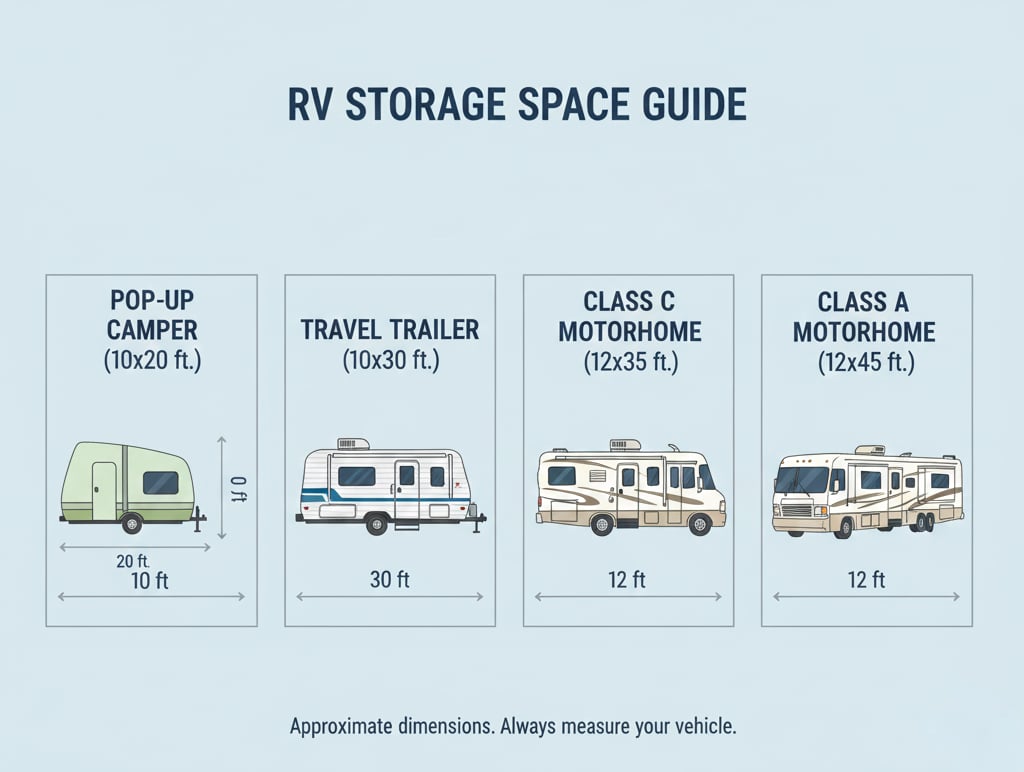
Always measure your specific RV and confirm space dimensions with the facility. Our team at our locations helps customers determine the right size, accounting for comfortable clearance and any additional gear you might store alongside your RV.
Preparing Your RV for Storage
Proper preparation protects your RV investment during storage periods. Start by thoroughly cleaning the exterior, including the roof, to remove dirt, debris, and any substances that could cause damage over time. Clean the interior completely, removing all food items, trash, and perishables that could attract pests or create odors.
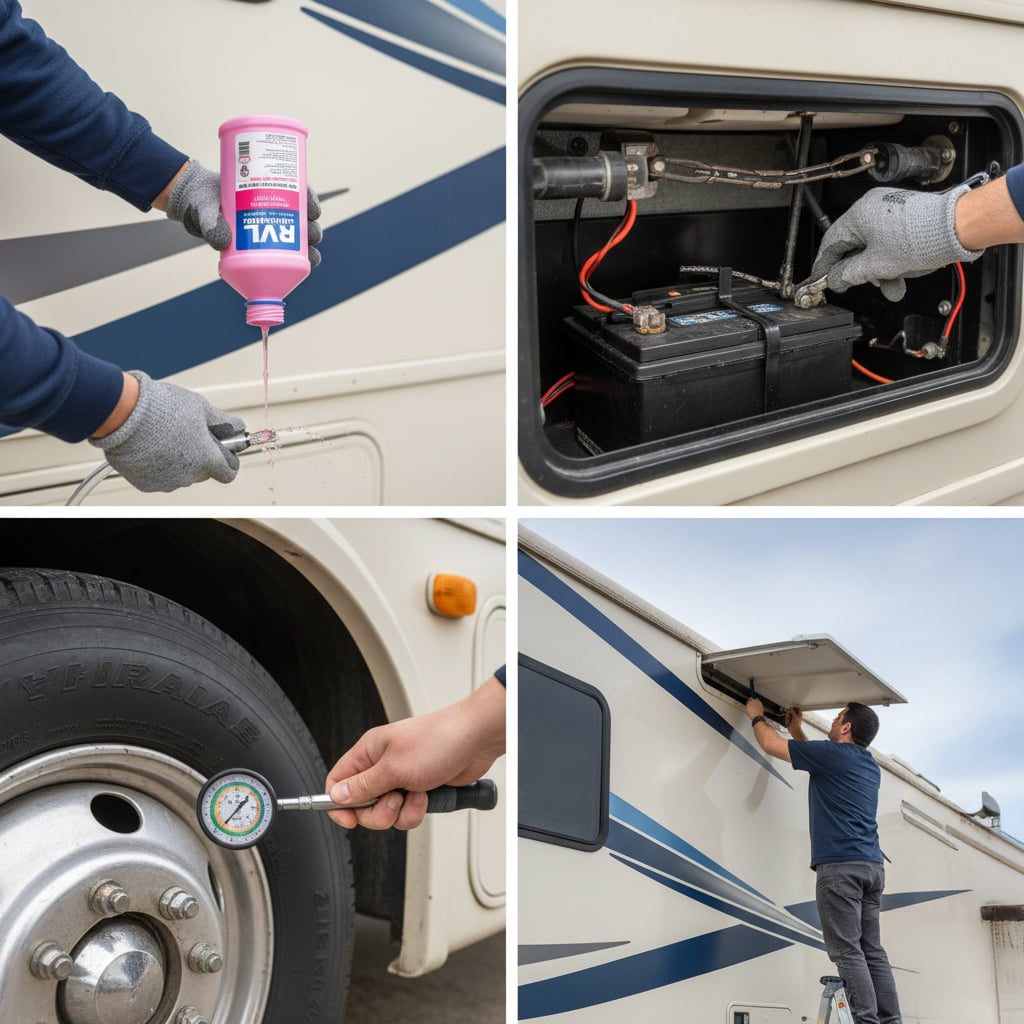
Empty and clean all water tanks: fresh water, grey water, and black water tanks. Flush the system thoroughly and add RV antifreeze to prevent freezing damage if storing through winter months. Even in mild climates, overnight freezes can damage water systems. Drain the water heater completely.
Check and service your RV's systems before storage. Top off fuel tanks and add fuel stabilizer to prevent degradation. Change engine oil if you are storing long-term. Used oil contains contaminants that can cause corrosion. Check tire pressure and inflate to manufacturer specifications, or slightly overinflate to account for gradual air loss during storage.
Disconnect batteries or use a battery tender/trickle charger to maintain charge. Dead batteries are a common issue with stored RVs. Cover exterior vents, exhaust pipes, and any openings where pests could enter using screens or plug covers. Apply protectant to rubber seals, tires, and exterior surfaces to prevent UV damage and cracking.
For enclosed storage, consider using a breathable RV cover for additional protection against dust. For outdoor storage, high-quality RV covers protect from sun and weather. Ensure covers are designed for RVs and allow airflow to prevent moisture buildup and mildew.
RV Storage Amenities and Features
Many RV storage facilities offer amenities that make storage more convenient. Dump stations let you empty tanks before storage without finding off-site locations. Wash stations or access to water for cleaning make pre-storage preparation easier. Some facilities provide these amenities for tenant use.
Electrical outlets at storage spaces let you maintain battery charge with trickle chargers or run dehumidifiers if storing in enclosed units. Wide driveways and pull-through spaces make maneuvering large RVs easier when storing or retrieving vehicles. Some facilities offer additional storage units where you can keep camping gear, supplies, and equipment separate from your RV.
Security features matter significantly for RV storage. Gated access with personalized entry codes, 24/7 video surveillance, and well-lit facilities deter theft and vandalism. On-site management during business hours provides another security layer and assistance when needed.
RV Storage Costs and Pricing
RV storage costs vary based on size, storage type, and location. Understanding pricing helps you budget appropriately and choose the best value for your needs.
Uncovered outdoor RV parking typically ranges from $75-200 per month depending on RV size and facility location. Smaller travel trailers cost less than large Class A motorhomes. Urban facilities generally cost more than rural locations.
Covered RV storage runs approximately $125-300 monthly, offering weather protection for a moderate premium over uncovered parking. The cost difference often pays for itself in reduced exterior maintenance and longer-lasting seals and components.
Enclosed RV storage ranges from $200-500+ per month based on size requirements. This premium option provides maximum protection and works well for high-value motorhomes or RVs you want to keep in pristine condition.
Many facilities offer discounts for long-term rentals or annual prepayment. Some customers store RVs seasonally (winter storage being common as owners winterize vehicles). Others store year-round, using their RV only during peak vacation periods. Month-to-month agreements provide flexibility for whatever storage duration you need.
Seasonal RV Storage Considerations
RV storage considerations differ by climate, but seasonal storage makes sense for many owners. Winter storage typically runs from October through March when camping season slows. This protects RVs during rainy months and frees up home parking space.
Summer storage occurs less frequently but works for owners who travel by other means during warm months or who use RVs primarily for holiday trips. Year-round storage makes sense if you lack space at home or face HOA restrictions on RV parking.
When retrieving your RV from storage, inspect it thoroughly before your trip. Check tire pressure, battery charge, and all systems. If you have winterized the system, you will need to de-winterize and flush the antifreeze before using water systems. Test appliances, lights, and other components to ensure everything functions properly.
Frequently Asked Questions
How much does RV storage cost per month?
RV storage typically ranges from $75-500+ monthly depending on RV size and storage type. Uncovered parking starts around $75-200, covered spaces run $125-300, and enclosed units range $200-500+. Large Class A motorhomes cost more than small travel trailers. Contact our facilities for pricing specific to your RV size.
Can I access my RV anytime?
Access hours vary by facility. Many RV storage locations offer extended access hours or 24-hour access since owners often retrieve RVs early for weekend trips. Some facilities have specific hours for security reasons. Check access policies when choosing a storage location, especially if you need early morning or late evening access.
Do I need insurance for RV storage?
Most facilities require proof of insurance for stored RVs. Your standard insurance typically covers RVs in storage, though you might reduce coverage to comprehensive-only for RVs not being driven. Check with your insurance provider about storage coverage and potential rate reductions.
Do I need registration for RV storage?
Yes, you need valid registration for your RV. Alternatively, a Planned Nonoperational period can be registered with the DMV to satisfy this requirement.
Do I need to winterize my RV?
Yes, winterization is recommended in most climates. Overnight freezes can damage water systems, and winterization prevents costly repairs. The process may be simpler in mild climates than in extreme cold regions but remains important for protecting your investment.
What is the best storage type for my RV?
The best option depends on your budget and how much protection you want. Covered storage offers excellent value, protecting from sun and weather at moderate cost. Uncovered works if budget is primary concern. Enclosed makes sense for expensive or new RVs deserving maximum protection. Our team helps evaluate your specific situation.