Vehicle Storage: Complete Guide to Car, RV, Boat & Motorcycle Storage
Finding secure storage for your vehicle can feel complicated with so many options available. Should you choose covered parking, an enclosed unit, or uncovered space? What size do different vehicles need, and how do you prepare them for storage? With over 20 storage facilities, our team has helped thousands of customers protect cars, RVs, boats, motorcycles, and specialty vehicles. This comprehensive guide covers everything about vehicle storage so you can make the best choice for your situation.
What Is Vehicle Storage?
Vehicle storage provides secure parking spaces or enclosed units specifically designed for cars, trucks, RVs, boats, trailers, motorcycles, and other vehicles. These storage solutions range from simple outdoor parking spots to fully enclosed, climate-controlled units that protect vehicles like a private garage. The right option depends on your vehicle type, how long you're storing it, and your budget.
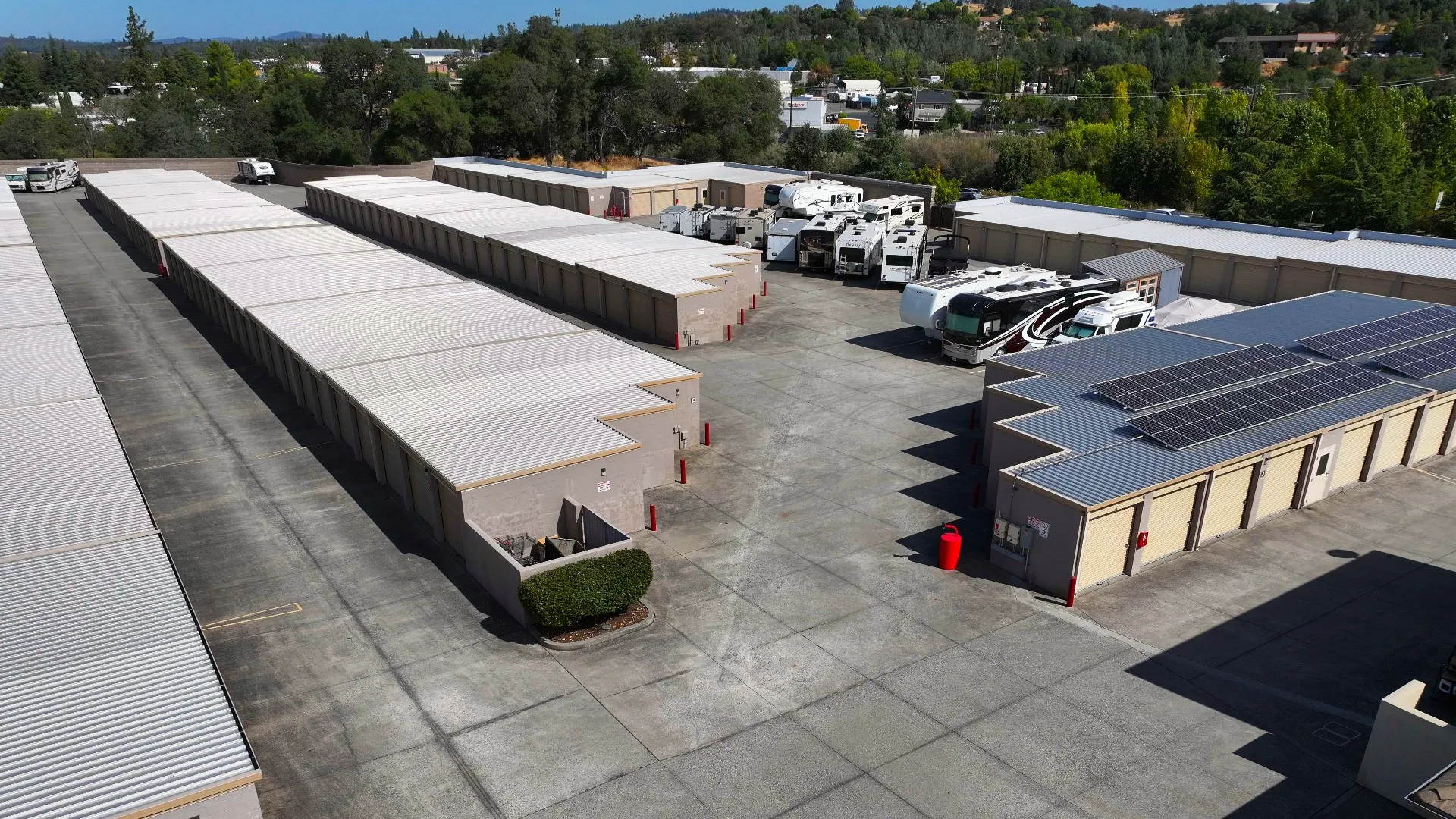
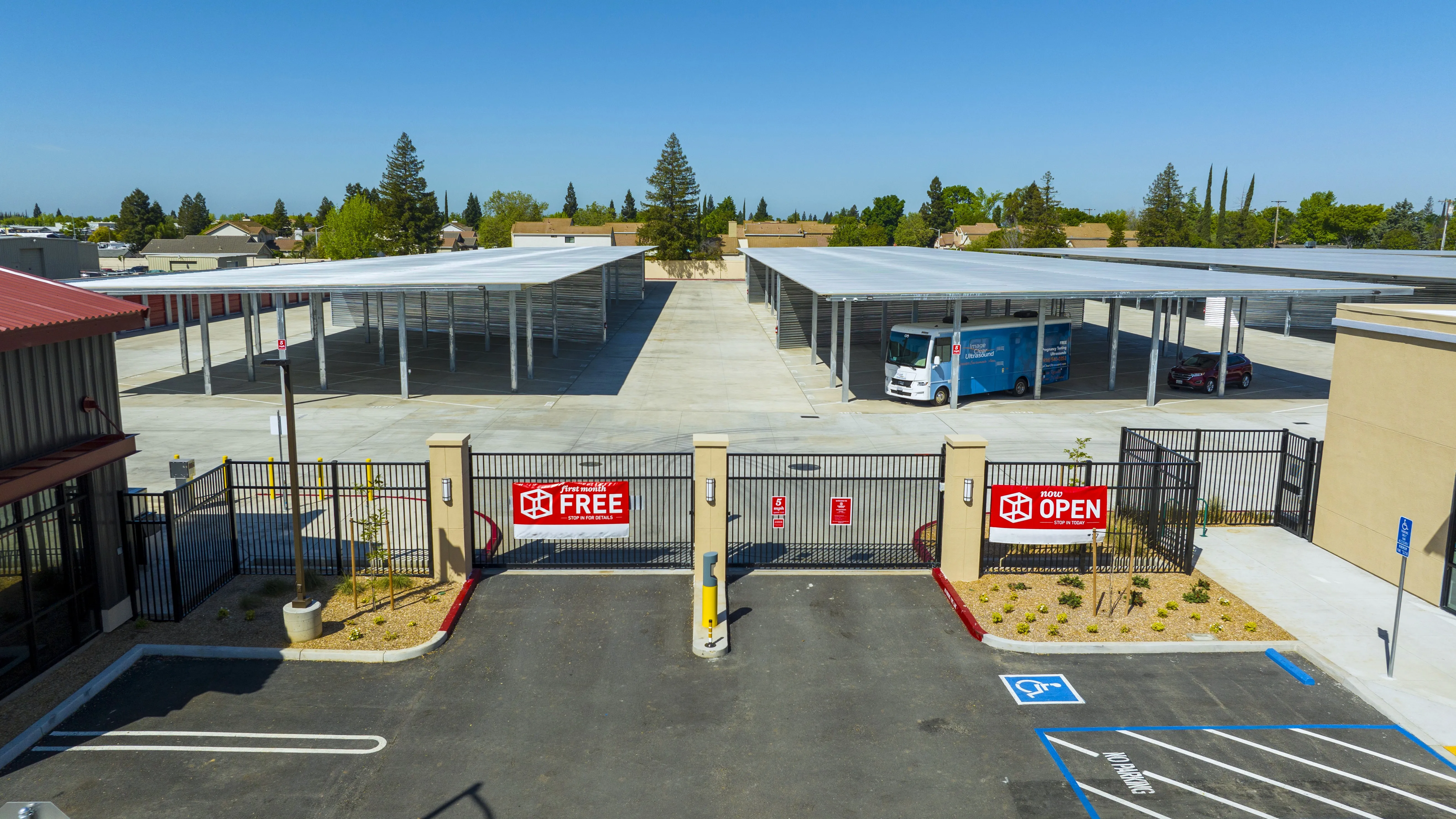
Unlike parking at home or on the street, vehicle storage facilities offer security features like gated access, video surveillance, and monitored entry. Many locations provide specialized amenities for vehicle storage including electrical outlets for battery maintenance, dump stations for RVs, and wash areas for cleaning before storage.
Types of Vehicle Storage Options
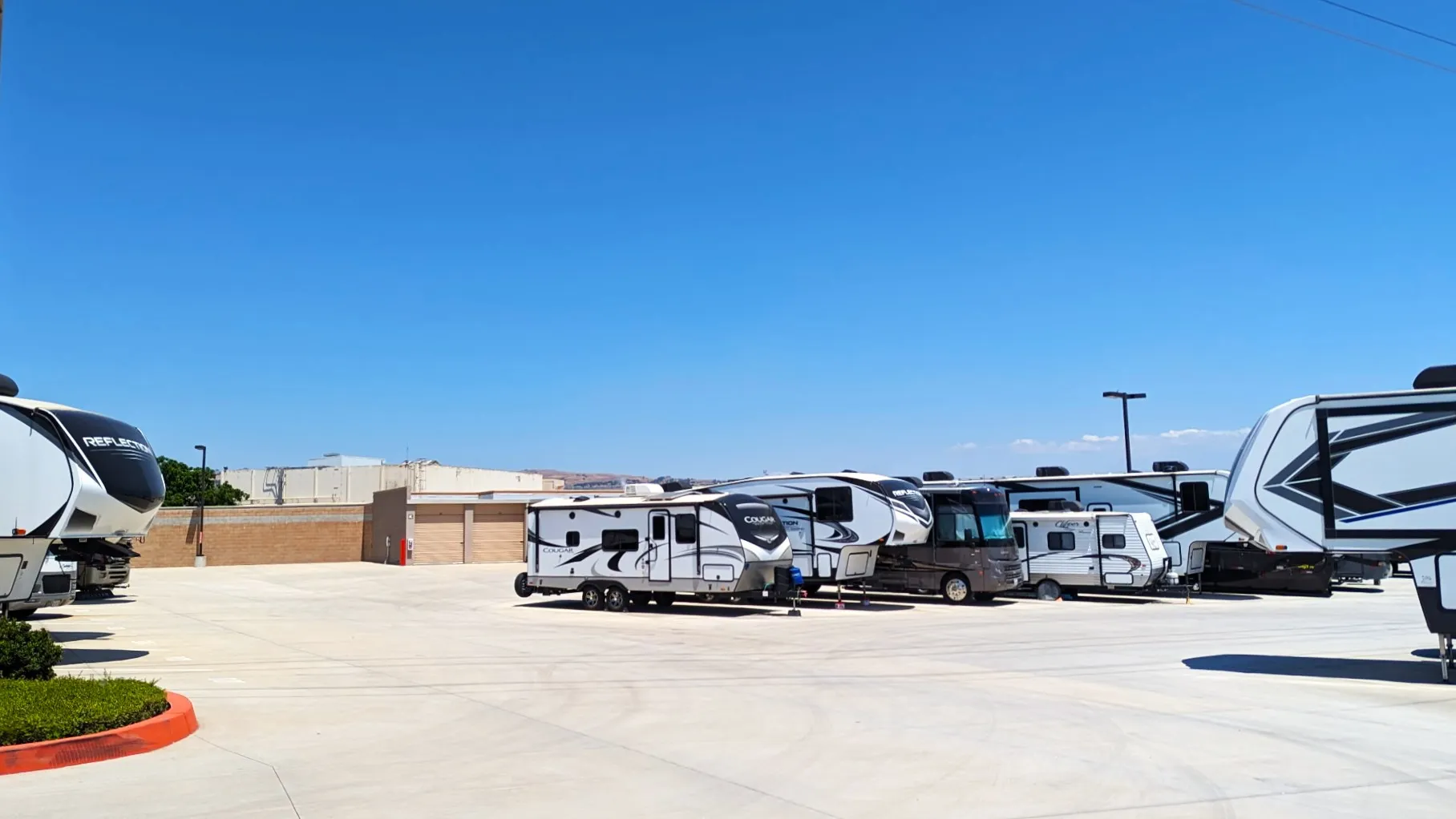
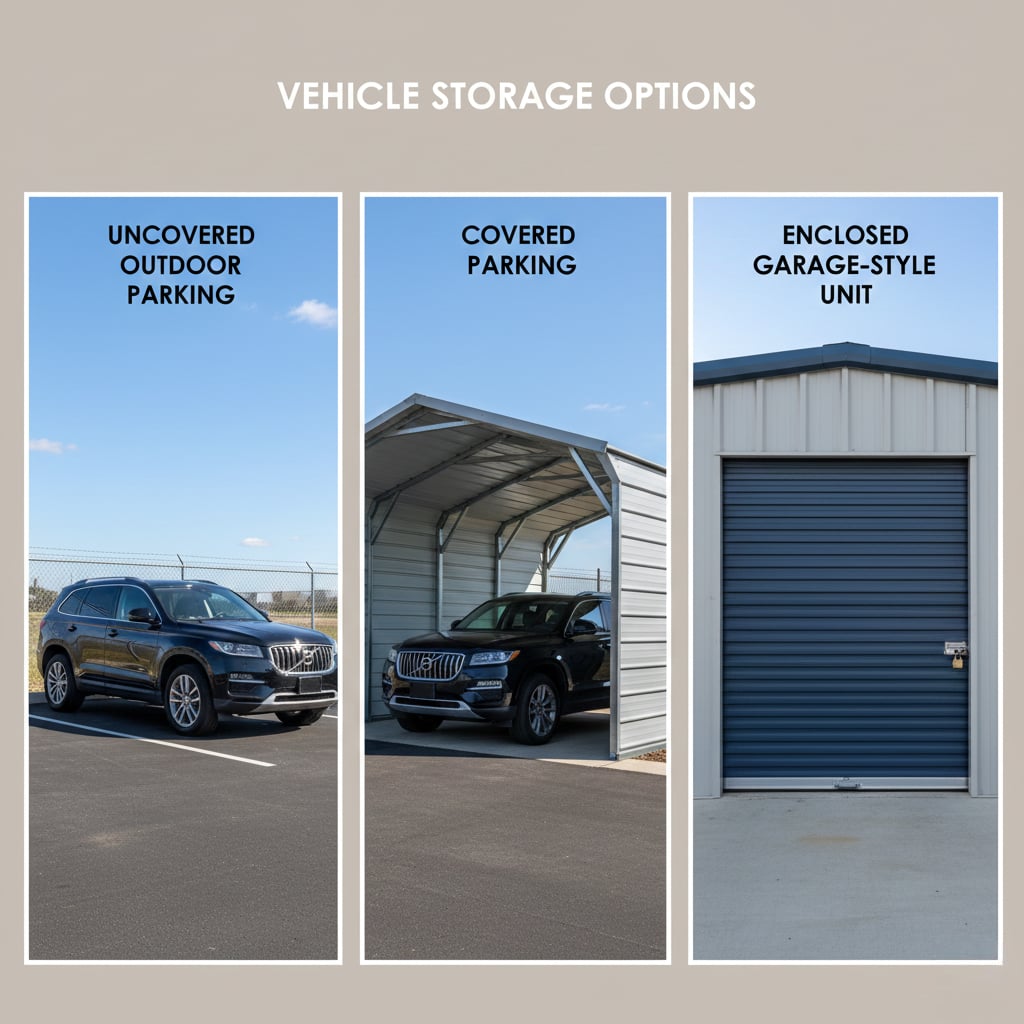
Uncovered Outdoor Parking: The most economical option, uncovered spaces provide a designated parking spot in a secure facility without overhead protection. Your vehicle sits in an open parking area exposed to weather but benefits from facility security features. This works well for vehicles you would normally park outside anyway and for short-term or seasonal storage when budget matters most.
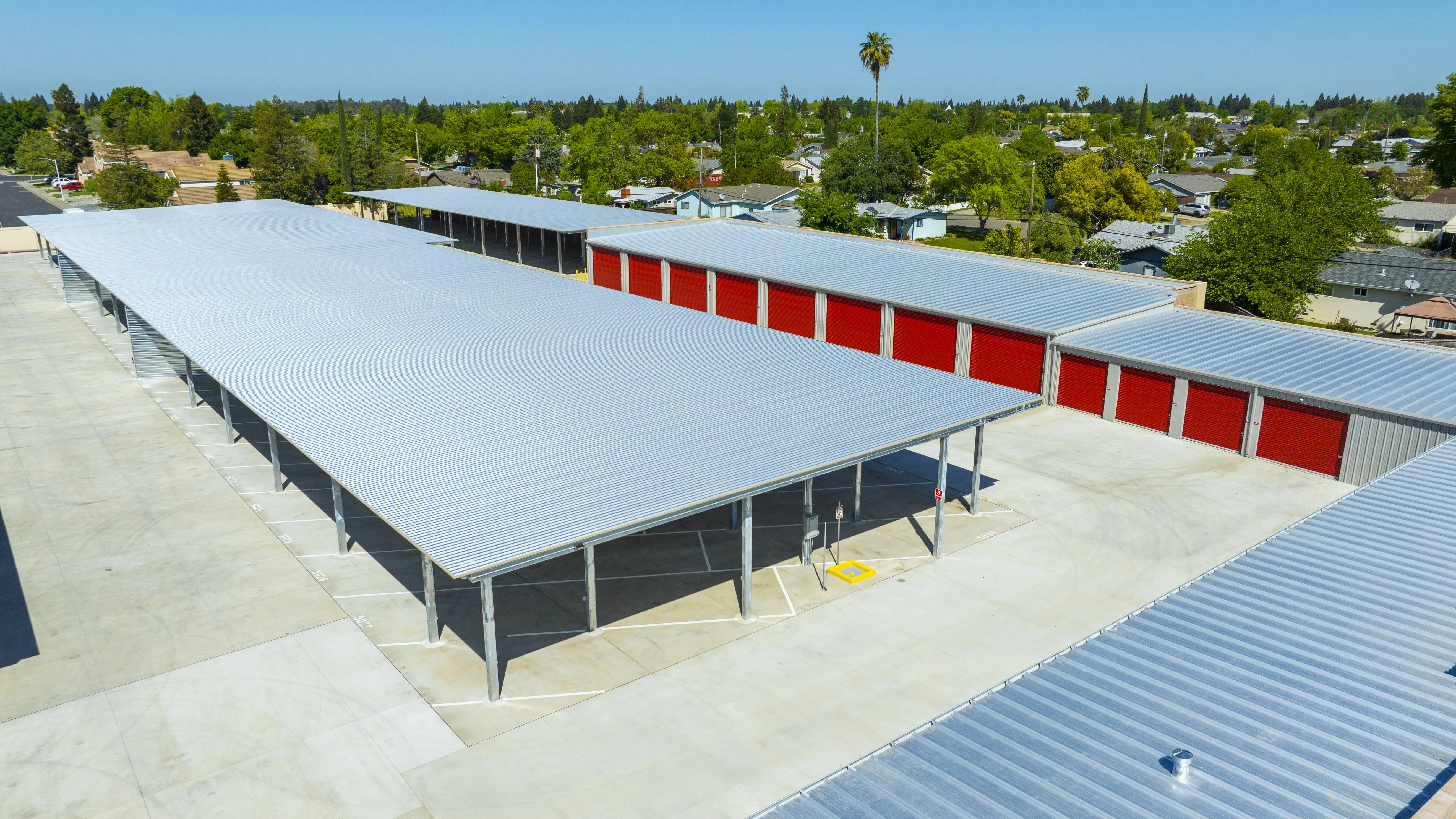
Covered Parking: Covered spaces offer a roof or carport-style structure overhead that protects your vehicle from direct sun, rain, snow, and bird droppings while sides remain open. This middle-ground option costs more than uncovered parking but less than fully enclosed storage. Covered parking works excellently for vehicles that need sun and weather protection but do not require complete enclosure.
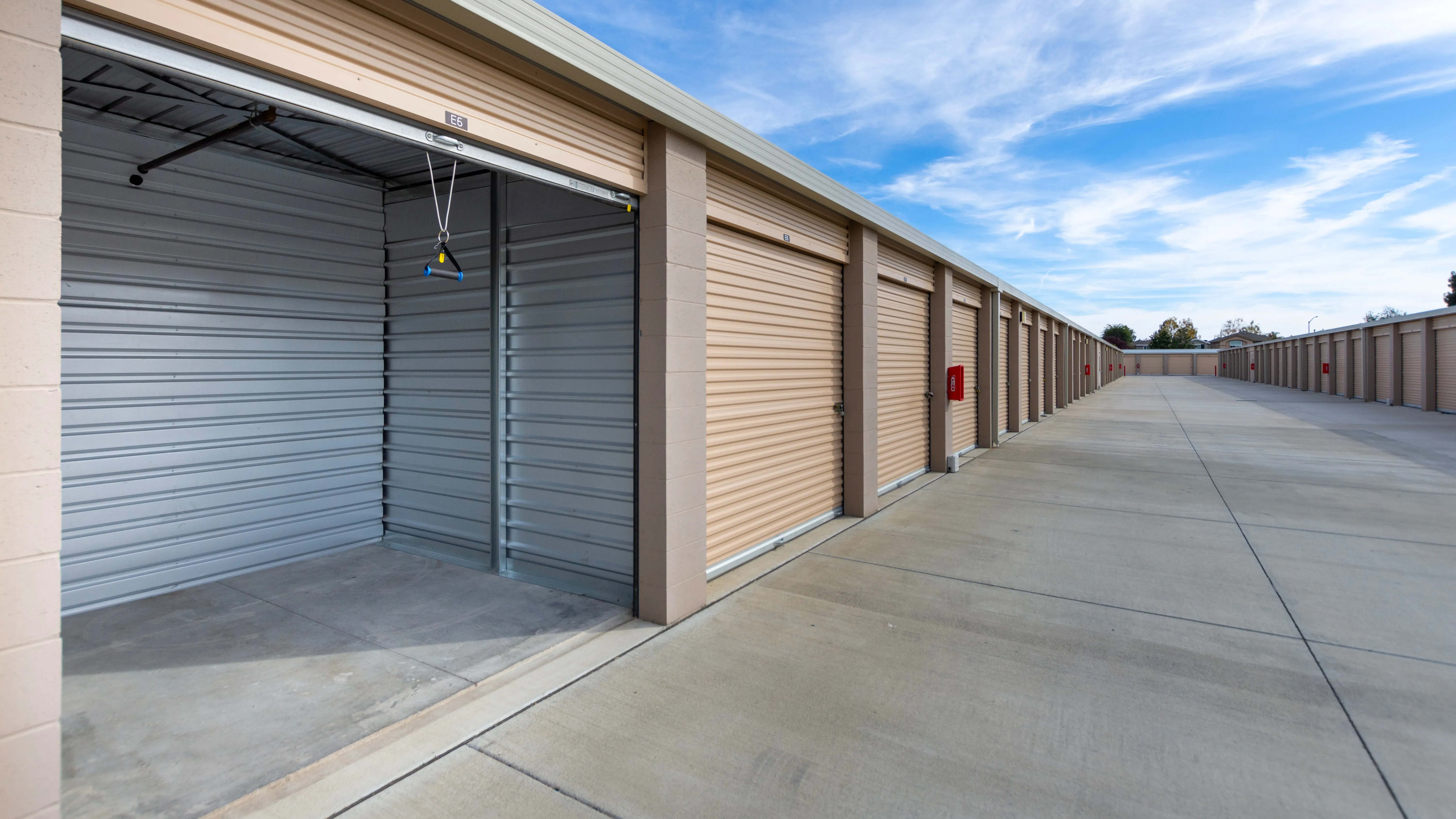
Enclosed Indoor Storage: Fully enclosed units with four walls and a door provide maximum protection, essentially giving your vehicle its own private garage. These units protect from all weather, maintain more stable temperatures, and offer the highest security level. Enclosed storage costs the most but makes sense for classic cars, luxury vehicles, motorcycles, boats, or any vehicle deserving premium protection.
Climate Controlled Storage: Some facilities offer climate controlled enclosed units that regulate temperature and humidity. This premium option protects classic cars, vintage motorcycles, and vehicles with sensitive components from temperature-related damage and moisture issues.
Vehicle Storage for Different Vehicle Types
Car Storage: Standard cars, including sedans, coupes, and small SUVs, typically need 10x15 to 10x20 spaces for enclosed storage or slightly smaller dimensions for parking spots. Classic cars, luxury vehicles, and sports cars often warrant enclosed or covered storage to protect paint, interiors, and value. Daily driver vehicles being stored seasonally often do fine in uncovered spaces.
RV and Motorhome Storage: RVs require significant space with sizes ranging from 10x30 for smaller campers to 15x40 or larger for full-size motorhomes. Height clearance matters too. Check facility specifications to ensure your RV fits. Many RV owners use our covered or uncovered spaces depending on budget and protection needs.
Boat Storage: Boats on trailers need length measurements plus additional space for the trailer tongue. A 20-foot boat might need a 10x30 space accounting for the trailer. Covered storage protects boats from sun damage to upholstery and fiberglass. Some facilities offer rack storage for smaller boats or specialized boat storage areas.
Motorcycle Storage: Motorcycles fit easily in small enclosed units, often 5x10 or even 5x5 spaces. Many riders store multiple bikes in a single 10x10 unit. Enclosed storage protects motorcycles from weather and theft while providing space for gear, tools, and parts storage alongside the bike.
Trailer and Equipment Storage: Utility trailers, cargo trailers, and equipment trailers store well in covered or uncovered spaces. Size requirements depend on trailer dimensions, with most fitting in 10x20 to 10x30 spaces.
Preparing Your Vehicle for Storage
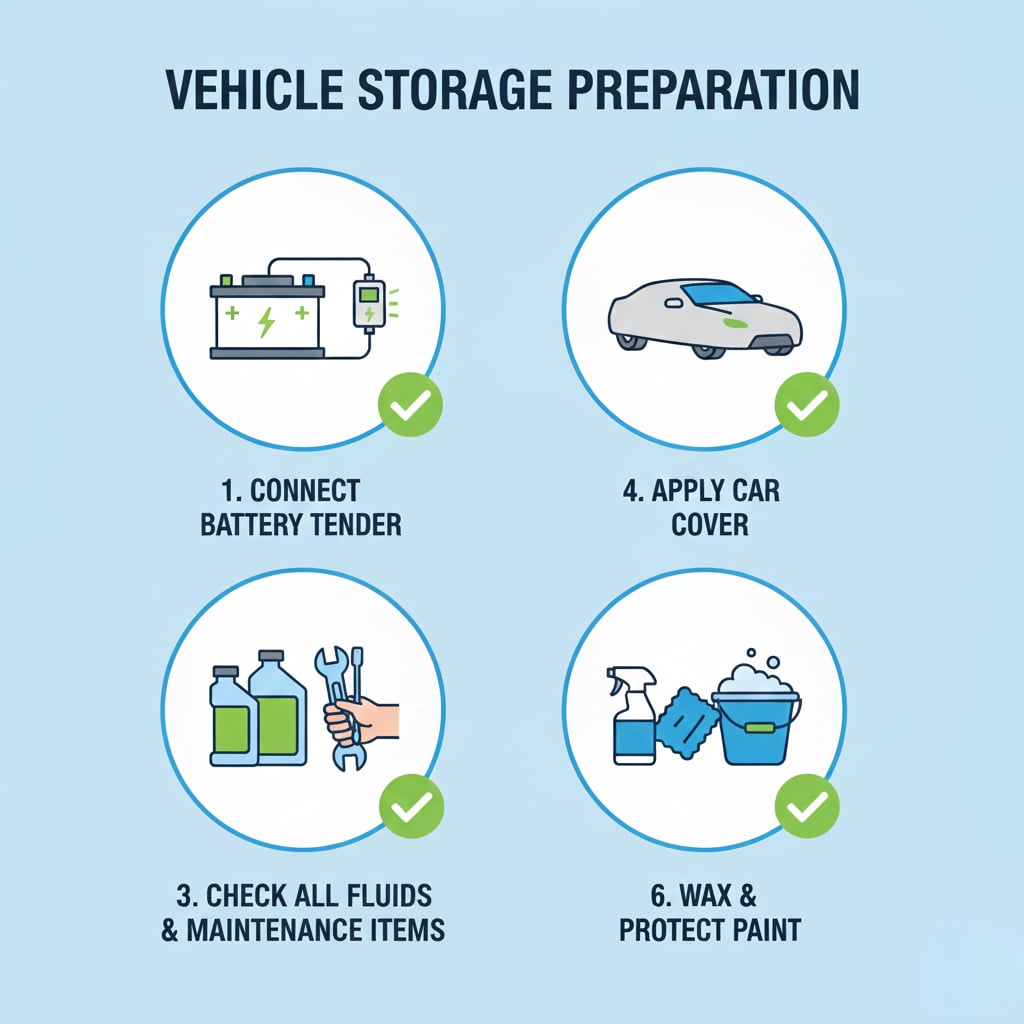
Proper preparation ensures your vehicle emerges from storage in excellent condition. Start by thoroughly cleaning the exterior and interior. Dirt and debris can cause damage over time. Fill the gas tank and add fuel stabilizer to prevent fuel degradation and tank corrosion. Change the oil before storage, especially if you are storing long-term, since used oil contains contaminants.
Check and inflate tires to proper pressure, or slightly overinflate to account for gradual air loss. For extended storage, consider placing vehicles on jack stands to prevent flat spots on tires. Disconnect the battery or use a battery tender to maintain charge. This prevents dead batteries and electrical system damage.
Cover windows and vents to keep out dust and pests. For enclosed storage, a quality car cover adds another protection layer. For convertibles or vehicles with fabric components, ensure everything is completely dry before covering to prevent mildew. Remove valuables and important documents from the vehicle. Storage insurance typically does not cover items left inside vehicles.
Consider rodent prevention in enclosed spaces by placing dryer sheets, mothballs, or commercial rodent deterrents inside the vehicle. Block exhaust pipes and air intakes with steel wool to prevent nests. For classic cars or valuable vehicles, document the condition with photos before storage for insurance purposes.
Vehicle Storage Security and Protection
Security matters significantly when storing vehicles, which often represent substantial investments. At our facilities, vehicle storage areas feature gated access with personalized entry codes that log every entry and exit. Video surveillance monitors storage areas 24/7, creating recorded evidence and deterring potential theft or vandalism.
Well-lit facilities improve security, especially if you need to access your vehicle during evening hours. On-site management during business hours provides another security layer and immediate assistance if issues arise. Individual locks on enclosed units give you complete control over access to your vehicle.
Many customers appreciate the peace of mind that comes from knowing their vehicle sits in a monitored, secure facility rather than on the street or in an unsecured lot. Insurance companies sometimes offer lower rates for vehicles in secure storage, recognizing the reduced risk.
Vehicle Storage Costs and Pricing Factors
Vehicle storage pricing varies significantly based on several factors. Uncovered outdoor parking typically ranges from $50-150 per month depending on vehicle size and location. Covered parking runs $100-250 monthly, while fully enclosed units cost $150-400+ per month based on size and features.
Size requirements directly impact cost. A motorcycle in a 5x10 unit costs much less than an RV in a 15x40 space. Location matters too, with urban facilities typically costing more than rural locations.
Storage duration sometimes affects pricing, with some facilities offering discounts for long-term rentals or prepayment. Seasonal demand influences rates too. RV storage costs often increase during winter when many owners store vehicles, while rates may drop during peak travel season when spaces free up.
Compare total costs including any setup fees, insurance requirements, and additional amenities you might use. The cheapest option is not always the best value if it lacks security features or does not properly protect your vehicle.
Frequently Asked Questions
How much does vehicle storage cost per month?
Vehicle storage typically ranges from $50-400+ monthly depending on vehicle size and storage type. Uncovered parking starts around $50-150, covered spaces run $100-250, and enclosed units range $150-400+. Large RVs and specialized storage cost more. Contact our facilities for current pricing specific to your vehicle type.
Do I need insurance for vehicle storage?
Most facilities require proof of insurance for stored vehicles. Your standard auto insurance typically covers vehicles in storage, though you might reduce coverage to comprehensive-only for vehicles not being driven. Check with your insurance provider about storage coverage and potential rate reductions.
Do I need registration for vehicle storage?
Yes, you need valid registration for your vehicle to be stored. Alternatively, a Planned Nonoperational period can be registered with the DMV to satisfy this requirement.
Can I access my vehicle anytime?
Access hours vary by facility. Many offer extended hours from 6am-9pm or even 24-hour access for vehicle storage areas. Some facilities restrict access during overnight hours for security. Check specific access policies when selecting a storage location, especially if you need frequent or off-hours access.
How long can I store my vehicle?
You can store vehicles as long as needed with month-to-month agreements. Some customers store seasonally (3-6 months), while others store for years during deployments, extended travel, or while owning vehicles they do not drive regularly. There is no maximum storage period.