Business Storage Solutions: Complete Guide for Small Business and Commercial Storage
Managing business inventory, equipment, and documents without expensive warehouse space challenges many growing companies. How can self-storage help your business operate more efficiently while controlling costs? With over 20 storage facilities, our team has helped thousands of small businesses, contractors, retailers, and service companies find flexible storage solutions. This comprehensive guide explains how business storage works and why it might be the cost-effective solution your company needs.
What Is Business Storage?
Business storage provides secure, flexible space where companies can store inventory, equipment, documents, supplies, and seasonal merchandise. Unlike traditional warehouse leases requiring long-term commitments and high overhead, business storage operates on month-to-month agreements at a fraction of warehouse costs. Small businesses gain the space they need without the financial burden of commercial real estate.
Business storage solves space problems for companies of all types. Retailers store seasonal inventory and overflow stock. Contractors keep tools, equipment, and supplies organized and secure. Service businesses archive important documents while maintaining easy access. E-commerce companies manage fulfillment inventory. Professional offices store archived files, furniture, and equipment. The flexibility of self-storage lets businesses scale space up or down as needs change.
Types of Business Storage Solutions
Climate Controlled Units: Temperature-regulated spaces protect sensitive inventory, electronics, documents, pharmaceuticals, and products requiring stable environmental conditions. Climate control maintains consistent temperature and humidity year-round, essential for many business applications. Businesses storing tech products, pharmaceuticals, cosmetics, or important documents typically choose climate controlled units.
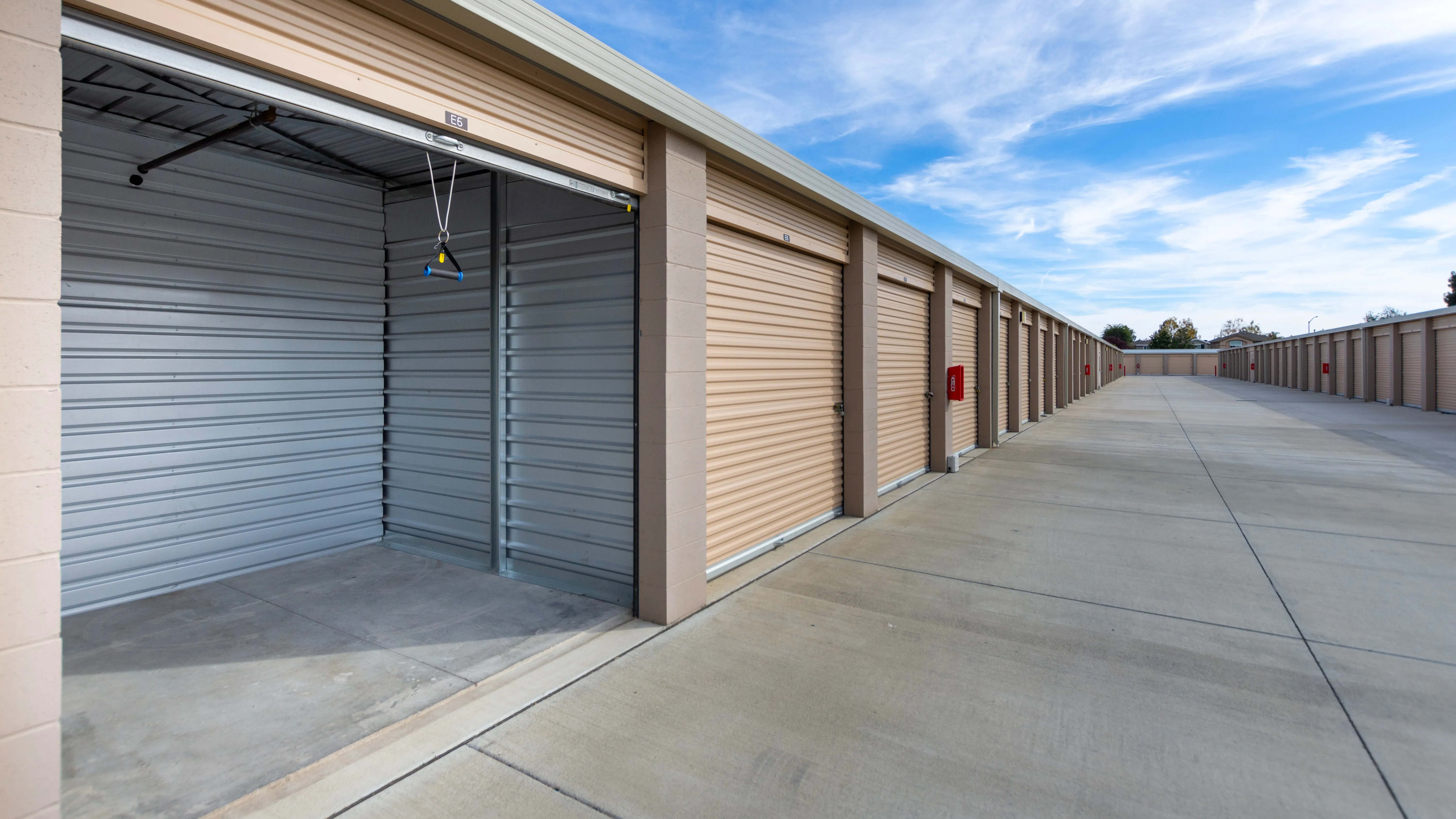
Drive-Up Access Units: Ground-level units with exterior doors allow vehicles to pull directly up for loading and unloading. This convenience matters significantly when moving inventory, receiving shipments, or accessing stored items frequently. Businesses requiring regular access (retailers rotating stock, contractors grabbing equipment, or distributors managing inventory) benefit greatly from drive-up convenience.
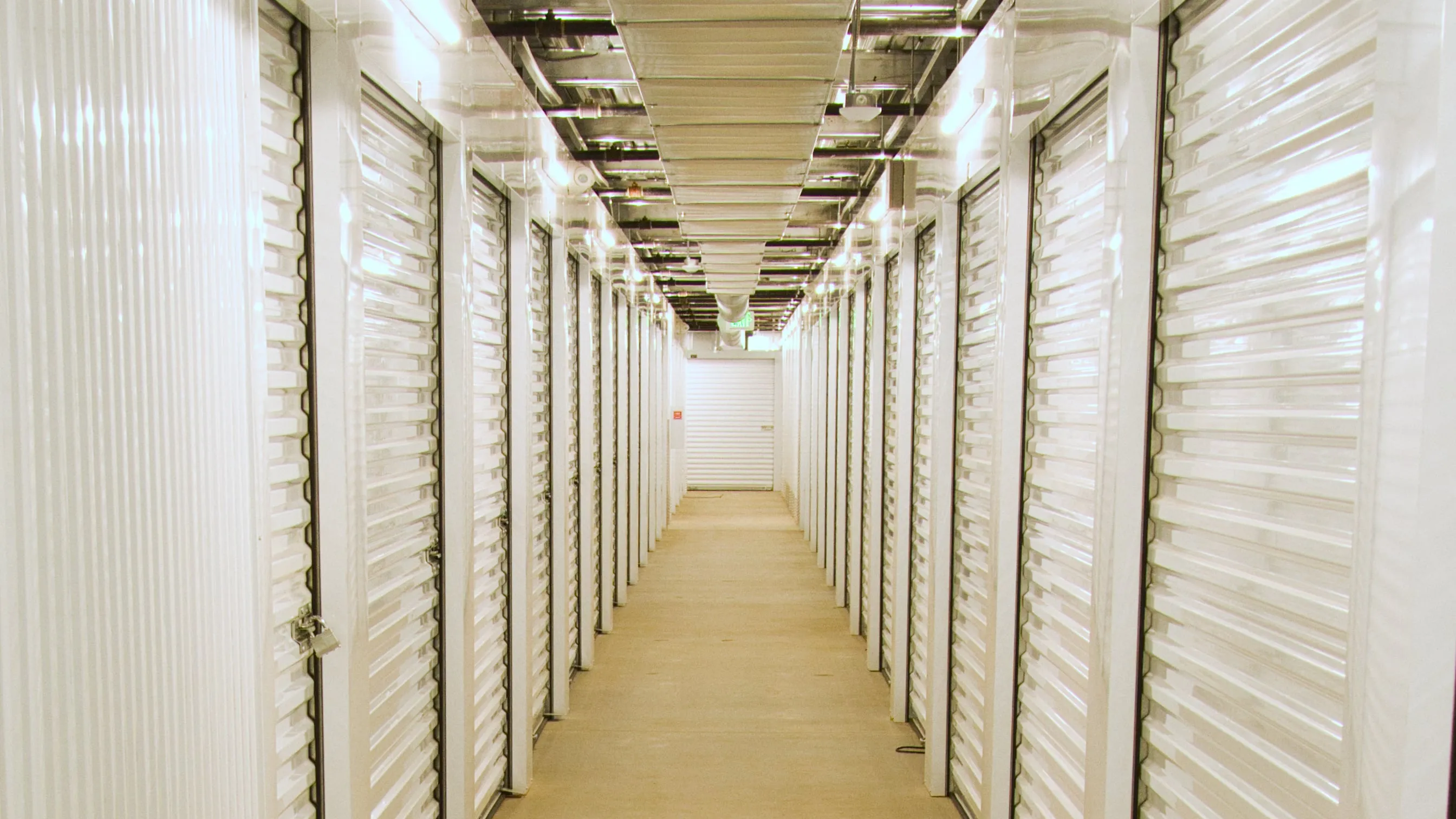
Indoor Storage Units: Located inside buildings with interior hallways, these units offer enhanced security and often include climate control. Professional service businesses, accounting firms, law offices, and medical practices often prefer indoor units for document storage and archived files. The professional environment and added security layers match these businesses' needs.
Large Commercial Units: Businesses needing substantial space can rent large units from 10x20 up to 10x30 or larger. These spaces accommodate significant inventory volumes, multiple pallets of products, or entire office contents during relocations or renovations.
Common Business Storage Uses
Inventory Management: Retailers, e-commerce businesses, and distributors use storage for overflow inventory, seasonal merchandise, and stock rotation. Rather than paying premium rent for retail or warehouse space to house excess inventory, businesses store overflow in cost-effective storage units. This approach lets companies maintain adequate stock levels without dedicating expensive square footage to storage.
Equipment and Tools: Contractors, landscapers, tradespeople, and service companies store tools, equipment, supplies, and materials securely when not in use. Storage protects expensive equipment from theft and weather while keeping work vehicles uncluttered. Many contractors maintain storage units stocked with supplies for different job types, improving efficiency and organization.
Document Archiving: Businesses must retain financial records, client files, contracts, and documents for years to meet legal and regulatory requirements. Storage units provide secure, organized space for archived documents that do not need daily access but must remain available when needed. Climate controlled units protect paper documents from deterioration, humidity damage, and temperature extremes.
Seasonal Merchandise: Retailers and seasonal businesses store off-season inventory rather than cluttering valuable retail space. Halloween stores, Christmas shops, sporting goods retailers, and garden centers use storage to manage inventory that only sells during specific seasons. This maximizes retail floor space for current merchandise while keeping seasonal stock secure and accessible.
Business Transitions: Companies relocating offices, renovating spaces, downsizing, or expanding use storage for furniture, equipment, and inventory during transitions. Short-term storage during moves prevents business disruption and protects assets during construction or relocation periods.
Trade Show and Event Supplies: Businesses attending trade shows, conferences, or events store displays, booth equipment, promotional materials, and inventory between events. Rather than shipping materials back and forth or storing at expensive facilities, companies maintain local storage for convenient access before events.
Benefits of Business Storage vs Traditional Warehouse Space
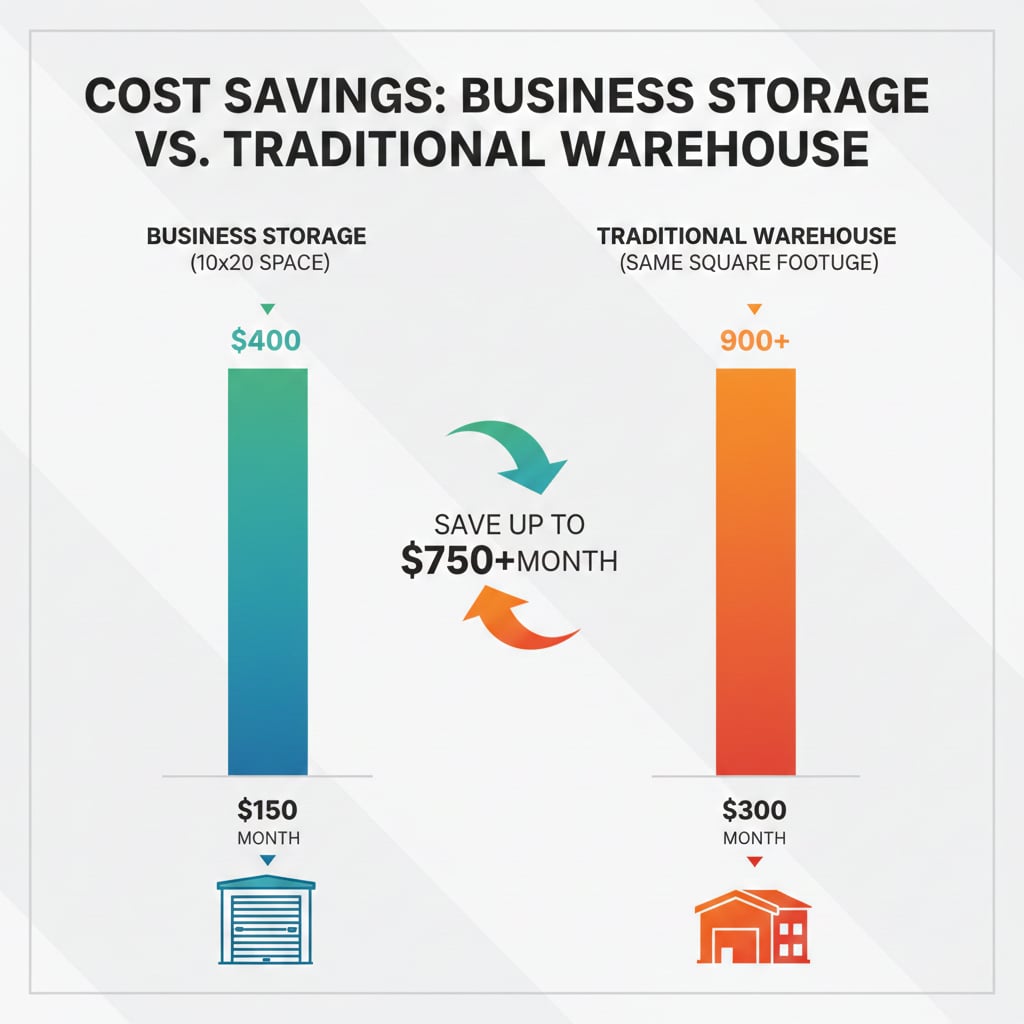
Significant Cost Savings: Business storage costs a fraction of warehouse or commercial space rental. Where warehouse space might run $1-3+ per square foot monthly ($300-900+ for 300 sq ft), comparable storage units cost $150-400 monthly. This difference lets small businesses access needed space without straining budgets.
No Long-Term Commitment: Month-to-month rental agreements provide flexibility that warehouse leases rarely offer. Businesses can adjust space as needs change, expanding during growth periods or reducing when appropriate. This flexibility matters tremendously for small businesses facing uncertain growth patterns or seasonal fluctuations.
Lower Overhead: Storage units require no utilities setup, janitorial services, property taxes, or maintenance responsibilities that come with warehouse leases. You rent space, use it as needed, and the facility handles property maintenance and management.
Multiple Location Strategy: Businesses operating across regions can maintain storage at multiple locations, distributing inventory closer to customer bases or job sites. This strategy reduces transportation costs and improves service delivery times.
Security Features: Professional storage facilities provide security measures many small businesses could not afford independently: gated access, 24/7 surveillance, individual unit locks, and monitored entries. These features protect valuable inventory and equipment effectively.
Scalability: Start with a small unit and expand as your business grows. Need less space? Downsize without penalty. This scalability matches the dynamic nature of small business growth, providing space when needed without excess commitment when it is not.
Choosing the Right Business Storage Size
Business storage needs vary widely based on what you are storing and how you will use the space. Consider both current volume and potential growth when selecting size.
5x5 or 5x10 units work for document storage, small inventory amounts, or archived files. Professional service businesses often use these sizes for records retention and occasional equipment storage.
10x10 units accommodate moderate inventory, contractor tools and equipment, or small office furniture. Many small online retailers and service businesses find this size handles their needs well.
10x15 or 10x20 units provide space for substantial inventory, multiple pallets of products, or combined storage of inventory and equipment. These mid-size units work well for growing businesses or seasonal retailers.
10x30 or larger units handle significant inventory volumes, bulk storage, or entire office contents. Larger businesses or those with substantial seasonal merchandise needs often require these larger spaces.
Our team at our facilities helps businesses assess needs, considering what you are storing, how you will organize it, and whether you need regular access requiring walkways and organization zones within the unit.
Maximizing Business Storage Efficiency
Organization Systems: Implement shelving, pallets, and clear organization systems that maximize vertical space and maintain easy access to inventory. Label everything clearly with contents and dates. Create inventory lists and maps showing where items are stored within the unit.
Access Planning: Store frequently accessed items near the front, seasonal or archived items toward the back. Leave walkways for easy navigation when retrieving specific items. Consider workflow when organizing. Group related items together.
Climate Control Decisions: Evaluate whether your inventory truly needs climate control or if standard storage suffices. Items like tools, certain inventory, and equipment often handle standard storage fine, saving money. Reserve climate control for sensitive items that genuinely require it.
Security Measures: Use quality locks, maintain limited access to only necessary employees, and document what is stored. Take inventory regularly and photograph valuable items. Ensure adequate insurance coverage for stored business assets.
Regular Maintenance: Visit storage periodically to check conditions, reorganize as needed, and remove items no longer necessary. Regular attention prevents storage from becoming cluttered and disorganized.
Business Storage Costs and Tax Considerations
Business storage typically costs $75-400+ monthly depending on unit size, features, and location. Climate controlled units run 25-50% more than standard units. Drive-up access may cost slightly more at some facilities but provides significant convenience value for businesses needing frequent access.
Urban locations typically cost more than rural facilities. However, proximity to your business operations often justifies higher costs through reduced transportation time and expenses.
Tax Deductibility: Business storage expenses are typically tax-deductible as ordinary business expenses. Consult with your accountant or tax professional about deducting storage costs, but most businesses can write off storage rental as a legitimate business expense, effectively reducing the net cost through tax savings.
Compare total costs including setup, insurance, and any administrative fees. The cheapest option is not always the best value if it lacks needed features like climate control, convenient access, or adequate security.
Frequently Asked Questions
How much does business storage cost?
Business storage typically ranges from $75-400+ monthly depending on size and features. A 10x10 standard unit runs around $150-200, while a 10x20 climate controlled unit might cost $250-350. Compare this to warehouse space costing $300-900+ for similar square footage. Contact our facilities for business storage pricing and potential volume discounts.
Can I use storage as my business address?
No, storage facilities cannot serve as official business addresses or places of business operations. Storage is for storing business items, not conducting business operations. You will need a separate business address for registration, mail, and customer-facing purposes.
Are business storage costs tax deductible?
Generally yes, business storage expenses qualify as deductible business expenses. Keep receipts and documentation of storage use for business purposes. Consult with your tax professional about your specific situation, but most businesses successfully deduct storage costs as ordinary and necessary business expenses.
Can multiple employees access our business storage?
Yes, you can authorize multiple employees for storage access. Most facilities let you add authorized users to your rental agreement. Some businesses provide employees with facility access codes while maintaining control over individual unit keys or locks.